

School and Daycare Vaccine Exemptions
Legal Assistance with Daycare and School Vaccine Exemptions for Children
BOOK 30 MINUTE CONSULTATION
($150 Consultation Fee)
Warning: Each exemption must be individualized and general advice on this page may not be applicable to your situation. Please also note that using templates or form letters can often result in a denial. Some schools and employers use AI to identify exemption requests that contain copied language and use this as a basis to argue the exemption is not sincere.
Siri & Glimstad is the leading national firm assisting individuals with vaccine exemptions. If you are looking for sophisticated assistance to provide the greatest odds of securing an exemption, we look forward to assisting you.
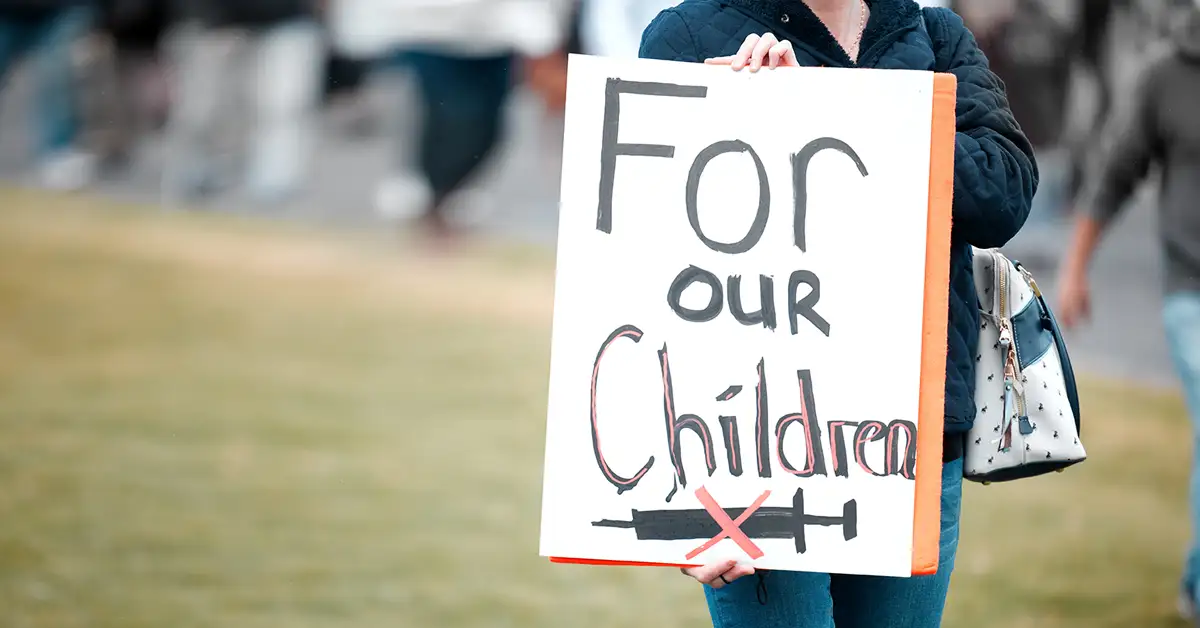
Every parent wants what’s best for their child. For many families across the United States, that includes making informed decisions about vaccinations—decisions that increasingly collide with the complex web of school vaccine requirements, daycare regulations, and camp policies. When your child’s ability to attend school or participate in early childhood programs hangs in the balance, understanding your legal options becomes essential.
Vaccine exemptions exist in every state, though they vary dramatically in scope and availability. There are typically three types of exemptions: religious, medical, and philosophical/personal, though in many states only one or two of these exemptions are available. Understanding what your family’s options are requires you to understand both state law and the type of school you are attending (private, public, parochial). In different states you may have different rights, and at different types of schools, the exemption types offered may vary. For example, there are currently four states that permit only medical exemptions – California, Connecticut, Maine, and New York. All other states either offer a religious exemption option, a philosophical or personal exemption, or both. Additionally, many private religious schools do not offer religious exemptions even in states where religious exemptions are protected.
At Siri & Glimstad, we help families across the nation secure valid vaccine exemptions and defend those exemptions when schools, or daycares challenge them. Navigating these requirements without legal guidance puts your child’s enrollment—and your family’s peace of mind—at unnecessary risk.
What Types of Vaccine Exemptions Are Available for Schoolchildren?
Understanding the categories of vaccine exemptions is the first step toward protecting your child’s enrollment rights. Two primary types exist under U.S. law, though availability varies significantly by state.
Medical Exemptions
All 50 states permit medical exemptions for children who cannot safely receive certain vaccines. Common qualifying conditions include:
-
Compromised immune systems from chemotherapy or other treatments
-
Congenital immune deficiencies
-
Severe allergic reactions to vaccine components such as gelatin or eggs
-
Prior serious adverse events following vaccination
-
Certain autoimmune conditions
Religious Exemptions
Most states permit religious exemptions for school and childcare entry. These exemptions protect parents whose sincerely held religious beliefs oppose vaccination. Importantly, most states do not require affiliation with an organized religion or proof from clergy. The exemption typically involves a parent’s signed affidavit affirming their religious conviction. For many states, this is just a form and does not require any personal or religious information from parents. It’s important to check your state’s health department guidelines online so you know what you are up against.
In a few states, a written and sworn statement is required. In these cases, the wording may matter. Schools and local health departments sometimes reject exemptions they deem insufficiently “sincere,” triggering disputes that require legal intervention. It’s important to note that typically, the legal standard for applying for religious exemption for school children is typically much lower than for college students, employees, and clinical rotation students in the states that allow for them.
BOOK 30 MINUTE CONSULTATION HERE
($150 Consultation Fee)
How Do School Vaccine Exemptions Work for K–12 Students?
All 50 states require certain childhood vaccinations for public school entry, and most extend identical immunization requirements to private, parochial, and religious schools. The specific vaccines required for school attendance typically include measles, mumps, rubella (MMR), diphtheria, tetanus, pertussis (DTaP), polio, varicella, and possibly hepatitis B and hepatitis A depending on your state. It’s important to note that although ACIP and the CDC have recently updated the routine childhood immunization schedule, many states have not enacted laws reflecting those changes. When there is a dispute between CDC guidance and state law, state law prevails. States have broad authority to make public health decisions. In the Siri & Glimstad vaccine exemption practice, our goal only to ensure that your child has the opportunity to obtain an exemption from these mandates.
Some states impose additional requirements that catch parents off guard. Utah mandates completion of an online education module before religious or personal exemptions are accepted. Texas requires notarization of nonmedical exemption affidavits. Louisiana may require physician involvement or parental statement review by governmental officials. Michigan requires parents to sign an affidavit through the department of health. Missing any of these steps can result in outright denial. Common legal issues with school exemptions:
- Schools rejecting valid exemptions based on subjective “sincerity” judgments
- Administrators demanding documentation beyond what state law requires
- Incorrect interpretation of religious exemption statutes
- Failure to provide written denial or appeal procedures
- Threats of truancy referrals when exemption disputes remain unresolved
- Pressure to provide invasive disclosures about the specifics of religious beliefs
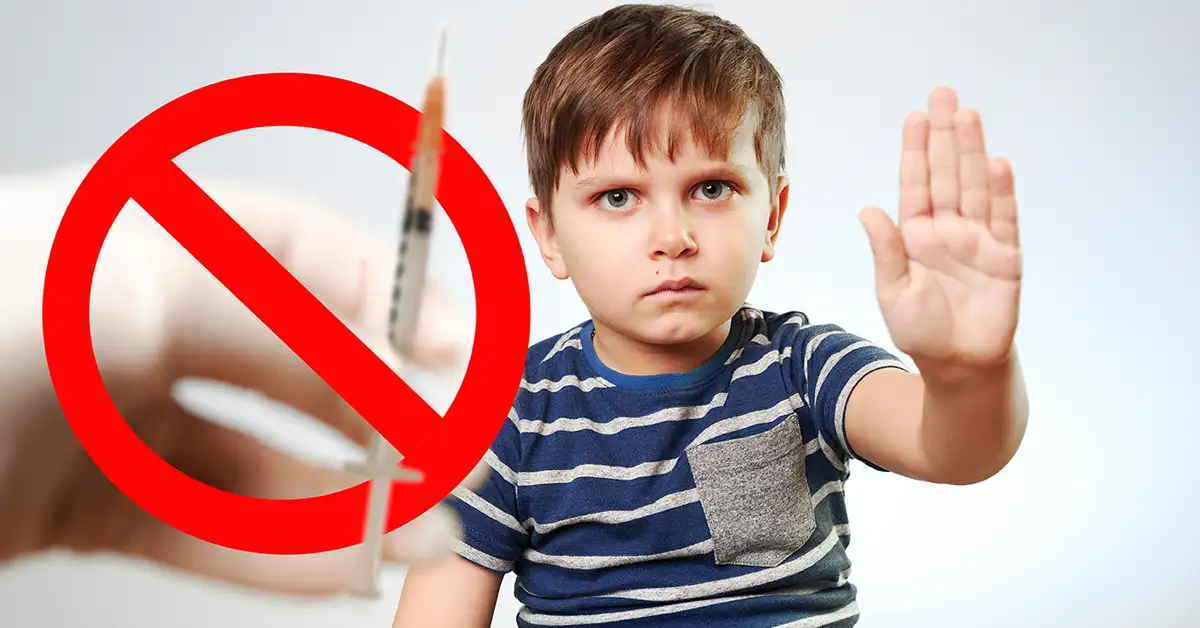
What Should Parents Know About Daycare Vaccine Exemptions?
Many states apply vaccination and exemption rules not only to K-12 schools but also to licensed daycares, early childhood programs, Head Start, and pre-K facilities. These settings often have their own forms, deadlines, and enforcement mechanisms that differ from school requirements. It is important to communicate with the facility clearly and directly to ensure all deadlines and requirements are met.
The vaccination schedule for infants and toddlers includes milestones at 2, 4, 6, and 12-15 months—meaning children in daycare face immunization requirements earlier and more frequently than school-age children.
One particularly frustrating scenario occurs when a private childcare facility rejects a religious exemption that would be accepted without question at a public school in the same state. Recently, we have increasingly seen that private childcare facilities choose not to accept religious exemptions. Some religious institutions have closed their doors to exemptions in general. This happens because private daycares sometimes set internal policies exceeding state minimums—and determining whether those policies are legally enforceable requires careful analysis. It’s important to schedule a consultation call with a licensed attorney to discuss your child’s case.
BOOK 30 MINUTE CONSULTATION HERE
($150 Consultation Fee)
Religious & Personal Belief Vaccine Exemptions FAQ
Are religious (or personal) vaccine exemptions available in my state?
It depends on where you live. All states allow only medical exemptions by law; permission to decline vaccines for religious or personal reasons varies widely. There are currently four states that do not offer religious or personal exemptions of any kind: New York, California, Connecticut, and Maine. As you may know, Siri & Glimstad is currently engaged in litigation on behalf of Informed Consent Action Network (ICAN) to win back these rights in New York, California, and West Virginia. Don’t hesitate to contact us if you reside in any of the other three states and want to fight for your children’s rights.
Out of the other 46 states, all permit some form of religious exemption and many permit philosophical or personal exemptions as well. For any questions about what your state’s requirements are, check with the department of health, and don’t hesitate to contact us if you need help navigating this process.
How do I claim a religious or personal belief vaccine exemption for my child?
Each state has its own process, but generally you must submit an official exemption form to the school or childcare center by the school’s deadline. The form usually requires you to attest that vaccinating your child would violate your religious or personal convictions. In many states, you must also complete a brief education module (in person or online) about vaccine risks and benefits before the exemption is granted.
Be careful: exemptions often expire on a yearly basis. Some states require annual renewals or periodic renewal of the statement of belief. Double-check whether your state wants a fresh affidavit each year or just once per school career.
Does my family need to belong to a church to get a vaccine exemption?
No. You do not need to be a member of any specific religion or church. Generally, courts have invalidated any requirement for formal church membership in order to qualify for religious exemption. What matters is that the parent or guardian genuinely believes that vaccination violates their own religious belief system. In many cases, parents need only sign forms. When the state requires an affidavit in support, a written statement from the parent or guardian is sufficient. You simply explain (usually on the form) why your faith opposes immunization. The sincerity of the belief can sometimes be challenged by schools, but legally the burden is on the school to respect your declared faith if the state law allows it.
Are personal or philosophical vaccine exemptions available for children?
“Personal belief” or “philosophical” exemptions (for non-religious moral objections) are very limited. Only some states allow them. If your state offers a personal belief exemption, the procedure is usually similar to religious: you sign a form stating your objection (often after completing an education module). However, most states (including some with religious exemptions) do not allow personal-belief exemptions at all. Check your state’s laws carefully: if personal exemptions are not explicitly permitted, the school can deny any non-religious exemption request.
How do daycare rules apply to religious or personal vaccine exemptions?
In many states, licensed daycare and preschool programs are subject to the same immunization requirements (and exemptions) as K–12 schools. Similarly, other states apply their exemption rules uniformly to all school-entry settings. In short, if a religious exemption is valid for public school attendance, it may work in a licensed daycare as well. (Again, private or private religious childcare centers may have different policies.)
My Child’s Private Religious School is Denying my Religious Exemption. Can They Do That?
Yes. Under the Ecclesiastical Abstention Doctrine, religious institutions have broad authority to make their own policies when it comes to religious issues, including whether or not to offer religious exemptions. Courts will not intervene in the inner workings of private religious schools, nor will they tell religious institutions how to interpret their own faith. A leading example is Flynn v. Estevez, 221 So. 3d 1241 (Fla. 1st DCA 2017), where a Catholic diocese school denied enrollment to a student whose parent claimed a state-law religious exemption, and the court upheld dismissal of the lawsuit rather than force the school to comply. In doing so, the court underscored that “A statute must always yield to the Constitution,” and that “civil courts may not insert themselves into the operation of the church,” especially where the dispute would require a court to referee competing religious views about what faith requires. In practical terms, if the school says its immunization policy reflects its religious mission or doctrine, that is exactly the kind of internal religious determination courts often refuse to adjudicate.
BOOK 30 MINUTE CONSULTATION HERE
($150 Consultation Fee)
Medical Vaccine Exemptions FAQ
What is a valid medical vaccine exemption for my child?
A medical exemption is granted when a child has a health condition that makes vaccination unsafe. All 50 states allow children to be exempted from school vaccine requirements for medical reasons. Common qualifying conditions include:
-
Severe immune system compromise (e.g. congenital immunodeficiency or chemotherapy) – such children may not tolerate live vaccines.
-
A serious allergy to a vaccine component (for example, anaphylaxis to egg protein or gelatin).
-
A previous serious adverse reaction to a vaccine (such as vaccine-induced encephalopathy).
Each exemption form provided by the individual state should be supported by a licensed physician’s statement explaining the child’s condition and why the risk of vaccination outweighs the benefits. For example, CDC guidance explicitly advises that severely immunocompromised individuals should not receive live-virus vaccines like MMR. The doctor’s note should clearly connect the medical condition to the need to avoid the specific vaccine(s).
Who can issue a medical vaccine exemption and how?
A medical exemption must be written and signed by an appropriate health care provider (usually a doctor or other licensed practitioner). Which type of provider is acceptable is typically dictated by state law. Additionally, some states may require the physician to be licensed within the state, so it’s important to understand your state’s laws and regulations. The provider must describe the child’s medical diagnosis and explain why each required vaccine is contraindicated. Most states have official forms or processes for medical exemptions which are used at public schools. In practice, it’s important to work with your doctor to ensure the exemption letter uses precise medical language (for example, referencing CDC contraindications) so that schools and daycares will accept it.
What if my doctor won’t provide a medical exemption letter for my child?
Some physicians are reluctant to write exemption letters, either from uncertainty about legal requirements or fear of punishment by local health departments. Some states have limitations on how many medical exemptions physicians are allowed to sign or how these exemptions must be submitted and processed. For example, in California, medical exemptions must be submitted by medical providers through the California Immunization Registry (CAIR) system, and physicians may only write a certain number of exemptions per year. Other states have specific requirements about which physicians are allowed to write and sign exemptions, including limiting exemptions to in-state physicians or certain types of providers (MD or DO). Due to these limitations, it is not uncommon for parents to have difficulty finding a doctor willing to write and sign an exemption. This is one of the biggest hurdles to any vaccine exemption. Please note, Siri & Glimstad cannot recommend physicians. However, you may need to consult legal experts who can help frame the medical justification correctly in order for the physician to sign the exemption. Detailed medical records (allergies, diagnoses, treatment history) can support the request.
Can the school or daycare deny a medical vaccine exemption?
Licensed schools and daycares that are covered by federal disability laws generally must accept a properly documented medical exemption under state law. Notably, private religious institutions may not be subject to federal disability laws. At public and secular private schools, the issue is typically whether or not the medical exemption is “properly documented.” Note that many states require that children meet the specific CDC-defined contraindications, which are very narrow and limited. However, if a child is able to show that he or she has a CDC-recognized contraindication or precaution to specific vaccine(s), then public schools and secular private schools may not refuse to accommodate the child.
Can the school eliminate my child in the case of an outbreak?
It’s important to note that even if a school does offer an exemption, outbreak rules will override that exemption in dire situations. Nearly every state has a provision that during an official outbreak of a vaccine-preventable disease, unvaccinated or exempt students must be excluded from school or daycare. In practice, this means that even a valid medical exemption won’t prevent exclusion if public health authorities declare an outbreak in your community. (The same rule generally applies to religious or personal exemptions).
BOOK 30 MINUTE CONSULTATION HERE
($150 Consultation Fee)
How Can Siri & Glimstad Help Protect Your Child’s Educational and Medical Freedom?
When a school or daycare challenges your child’s vaccine exemption—or when you’re unsure how to navigate your state’s complex requirements—the stakes couldn’t be higher. Your child’s access to education, early childhood development, and enrichment activities hangs in the balance. The law exists to protect your rights, but only if you know how to invoke it properly.
Siri & Glimstad brings national litigation and advisory experience in vaccine exemptions, vaccine injury compensation, civil rights, and education-related disputes. Our attorneys understand the interplay between federal constitutional protections, state exemption statutes, and institutional policies that often exceed legal requirements. We know how to craft exemption documentation that withstands scrutiny, respond to wrongful denials, and—when necessary—pursue legal action to vindicate your family’s rights. Contact us today.
BOOK 30 MINUTE CONSULTATION HERE
($150 Consultation Fee)
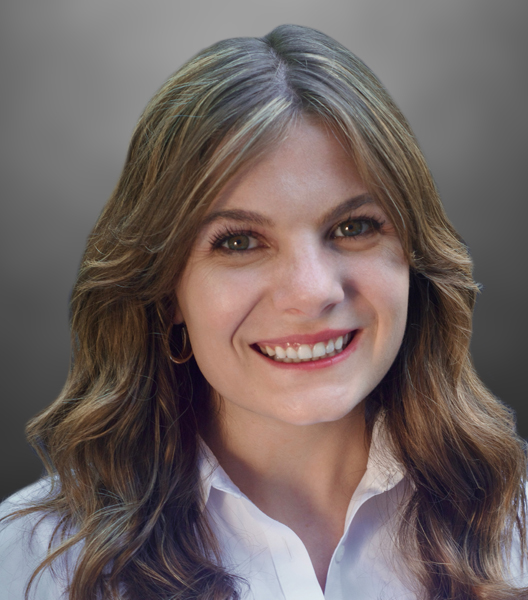
Content Reviewed by: Samantha Caputo – Vaccine Exemption Lawyer
Samantha works in the firm’s vaccine exemption practice. In this capacity, she has effectively advocated for clients across the country in both medical and religious exemption matters, including employees, college students, clinical rotation students, surgical patients, and immigrants pursuing relief through vaccine waiver applications.
This page was last updated on: February 19, 2026
Contact Us
BOOK 30 MINUTE CONSULTATION HERE
($150 Consultation Fee)


